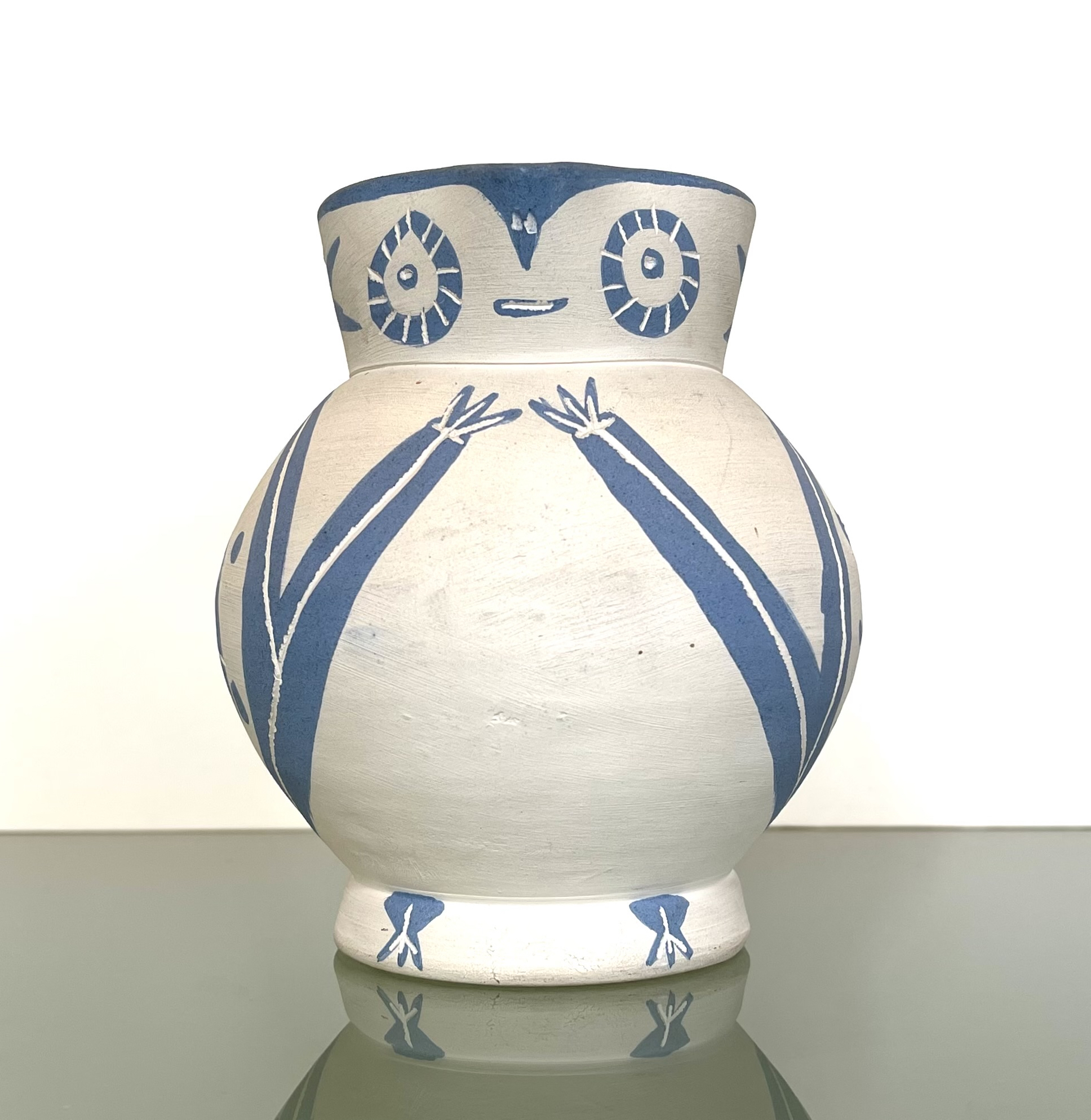
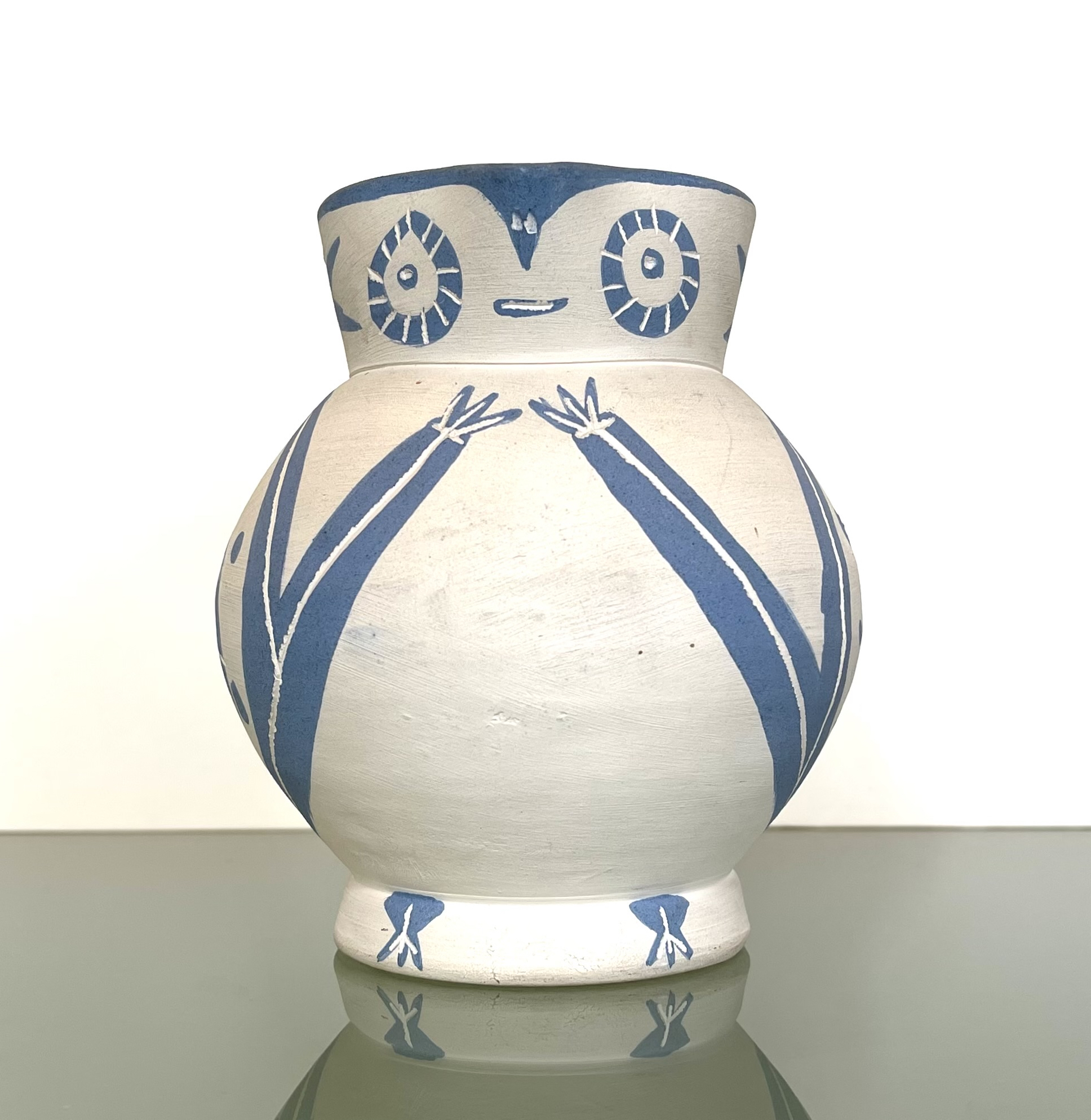
PABLO PICASSO (1881-1973)
Petite Chouette (A.R. 82)
White earthenware ceramic pitcher, partially engraved, with coloured engobe and glaze.
1949
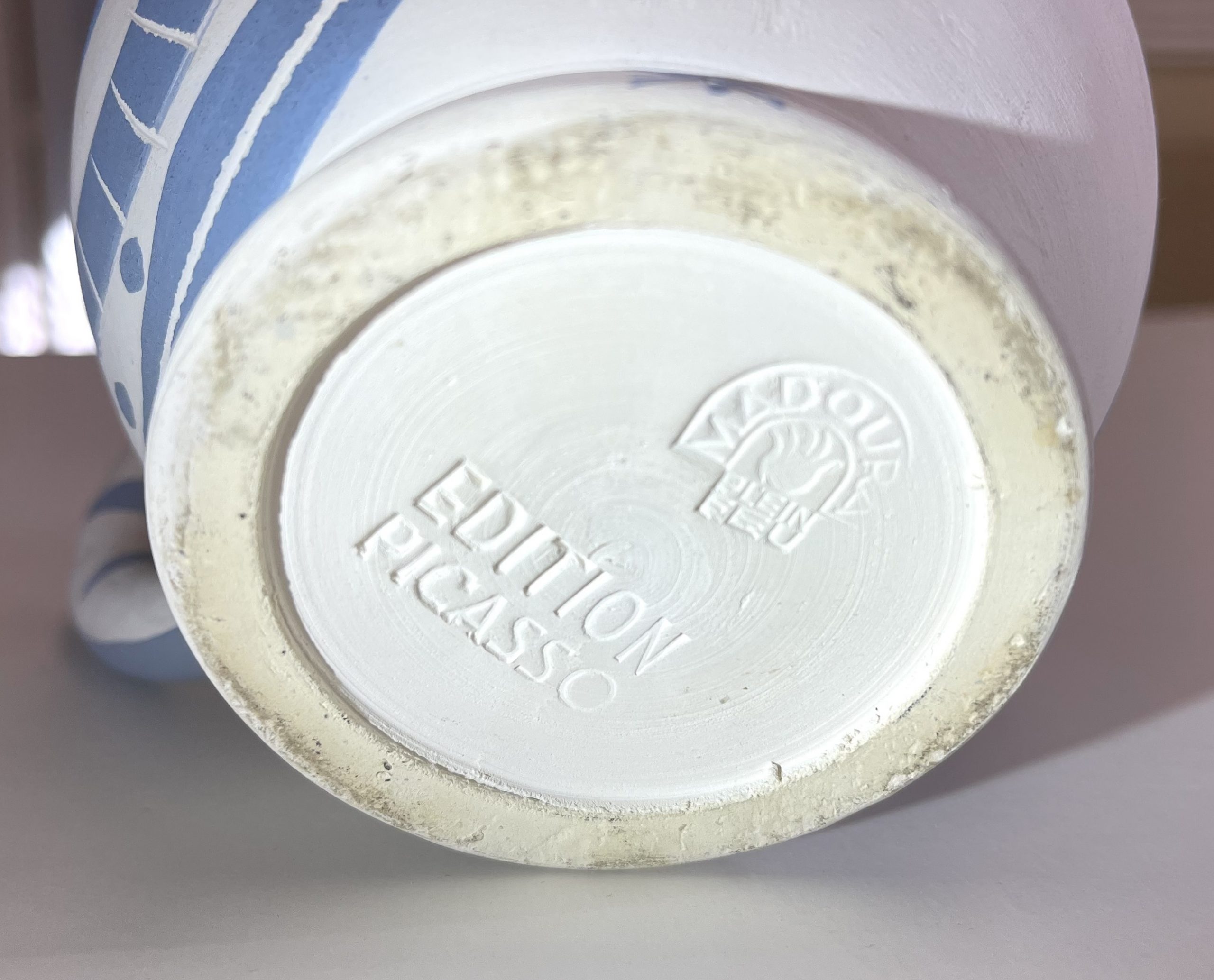
Stamped “Madoura Plein Feu” and “Edition Picasso” (underneath).
Height: 5½ in. (14 cm.)
Conceived in 1949, a variant in design and color aside from the edition of 200.
Literature: “Pablo Picasso: Catalogue of the Edited Ceramic Works 1947-1971.”, A. Ramié. 1988. p.53, no. 82 (another ex. ill.).
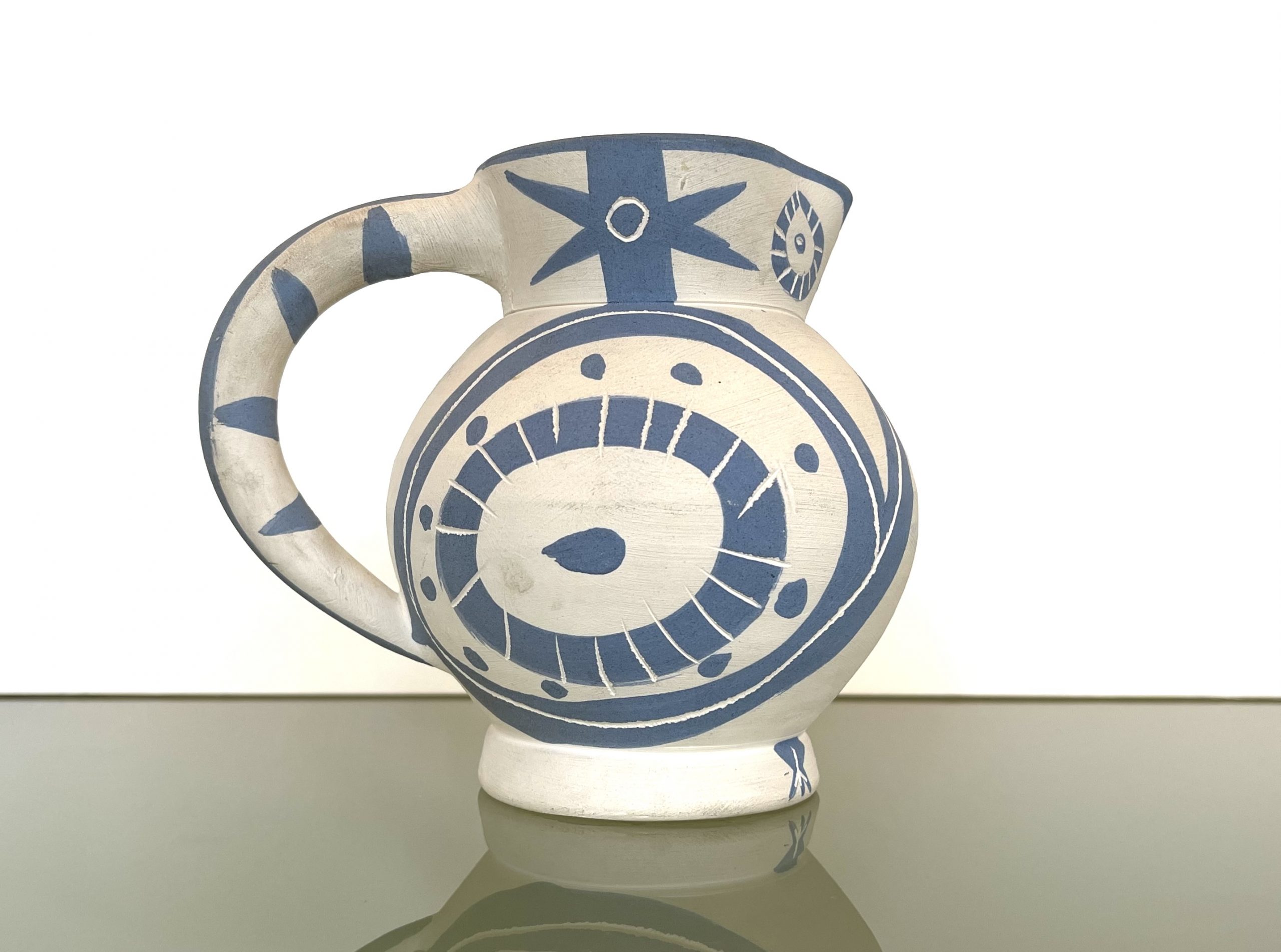
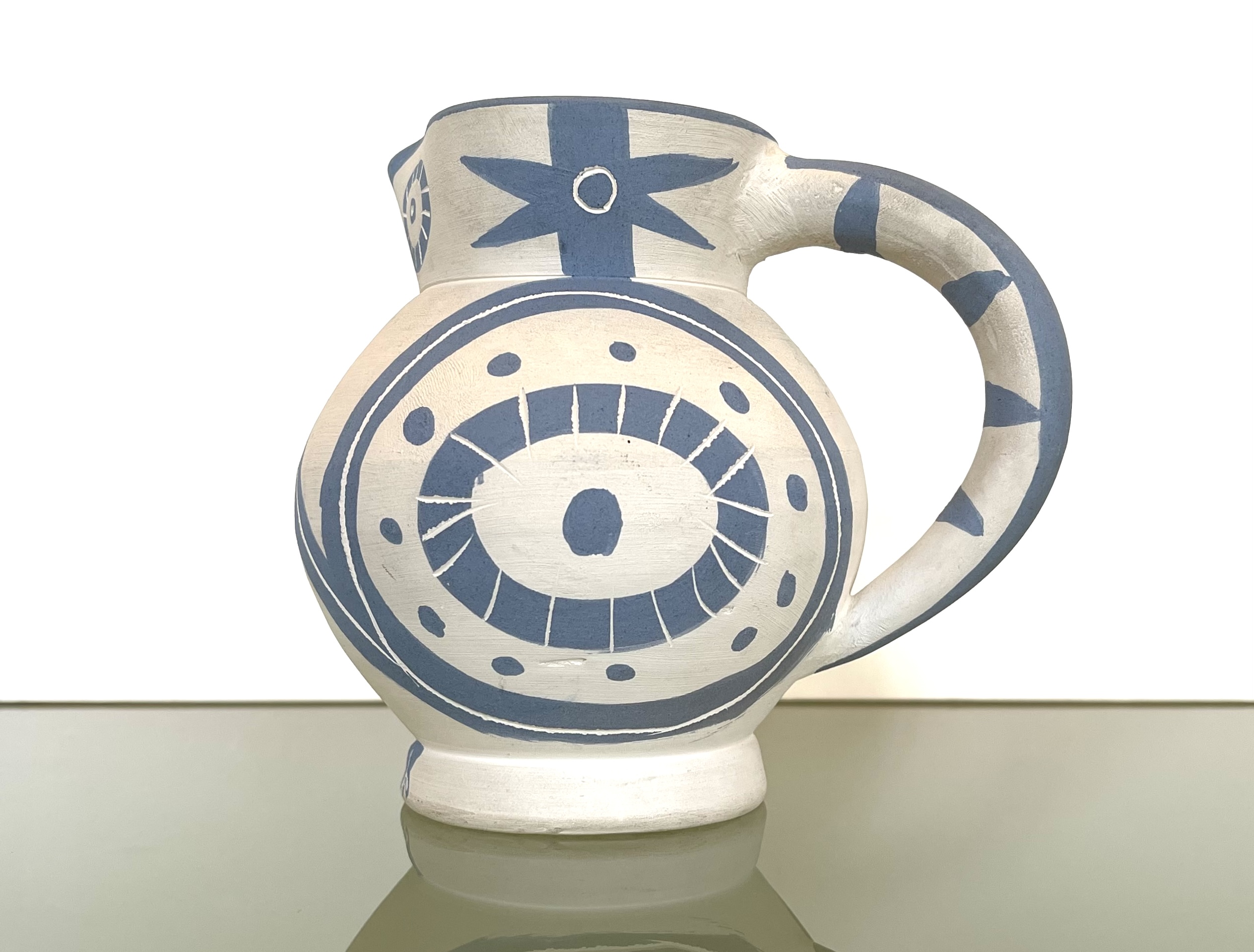
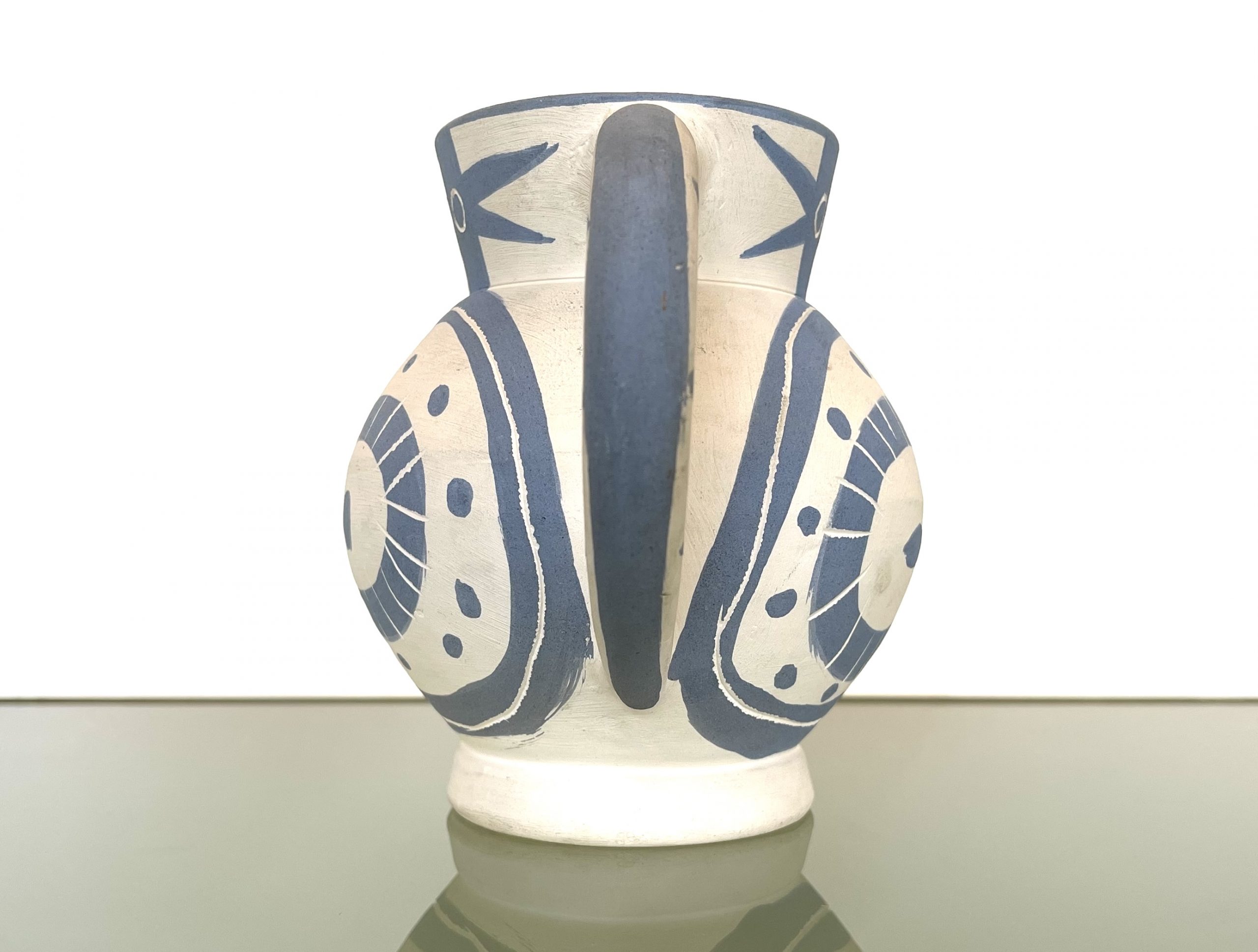
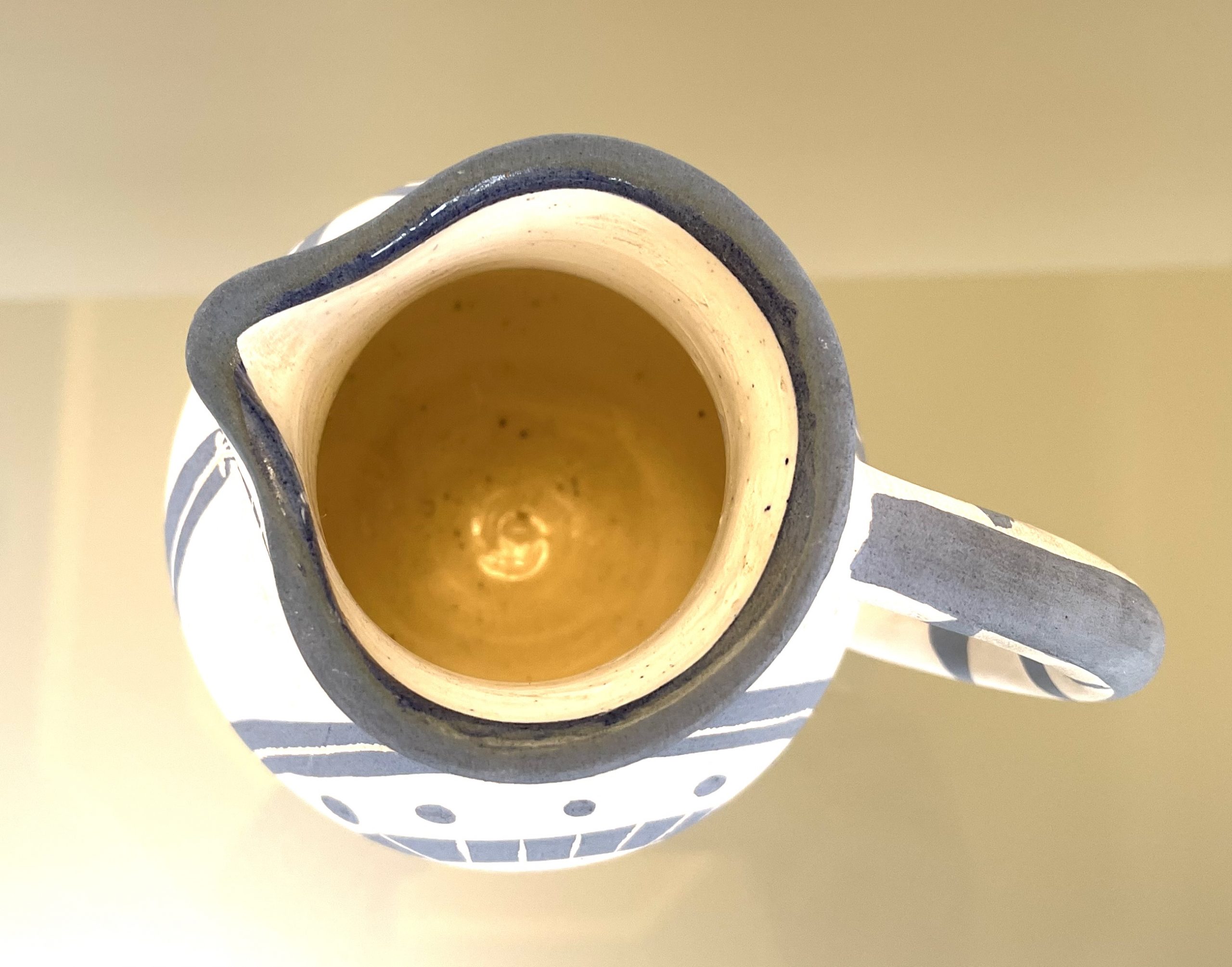
For Pablo Picasso, the owl symbol represents both a deeply personal companion and a profound mythological archetype. The connection began in 1946 when Picasso found an injured owl in Vallauris. He nursed the bird back to health, named him Ubu, and kept him in his studio, where the owl would sit on his thumb or fingers while he worked. Picasso strongly identified with the owl. He saw its fierce, unblinking glare and its nocturnal habits as a reflection of his own intense, penetrating creative gaze and personality.
The bird became a perfect geometric motif for his Madoura ceramics. Picasso realized that the organic, rounded shape of traditional Mediterranean jugs, vases, and plates could naturally transform into the body, eyes, and wings of an owl.
Steeped in classical culture, Picasso also invoked the ancient Greek symbolism of the owl—the companion of Athena, the goddess of wisdom, handicraft, and strategic warfare. The Owl of Athena is the traditional Western symbol of deep wisdom, clairvoyance, knowledge, insight and erudition. Because the owl can see in the dark, it represents intellectual clarity and the ability to perceive truth and wisdom. According to myth, the owl sat on Athena’s “blind side” to reveal what she could not see herself, allowing her to understand the absolute and objective truth of any situation.