Pablo PICASSO (1881-1973)
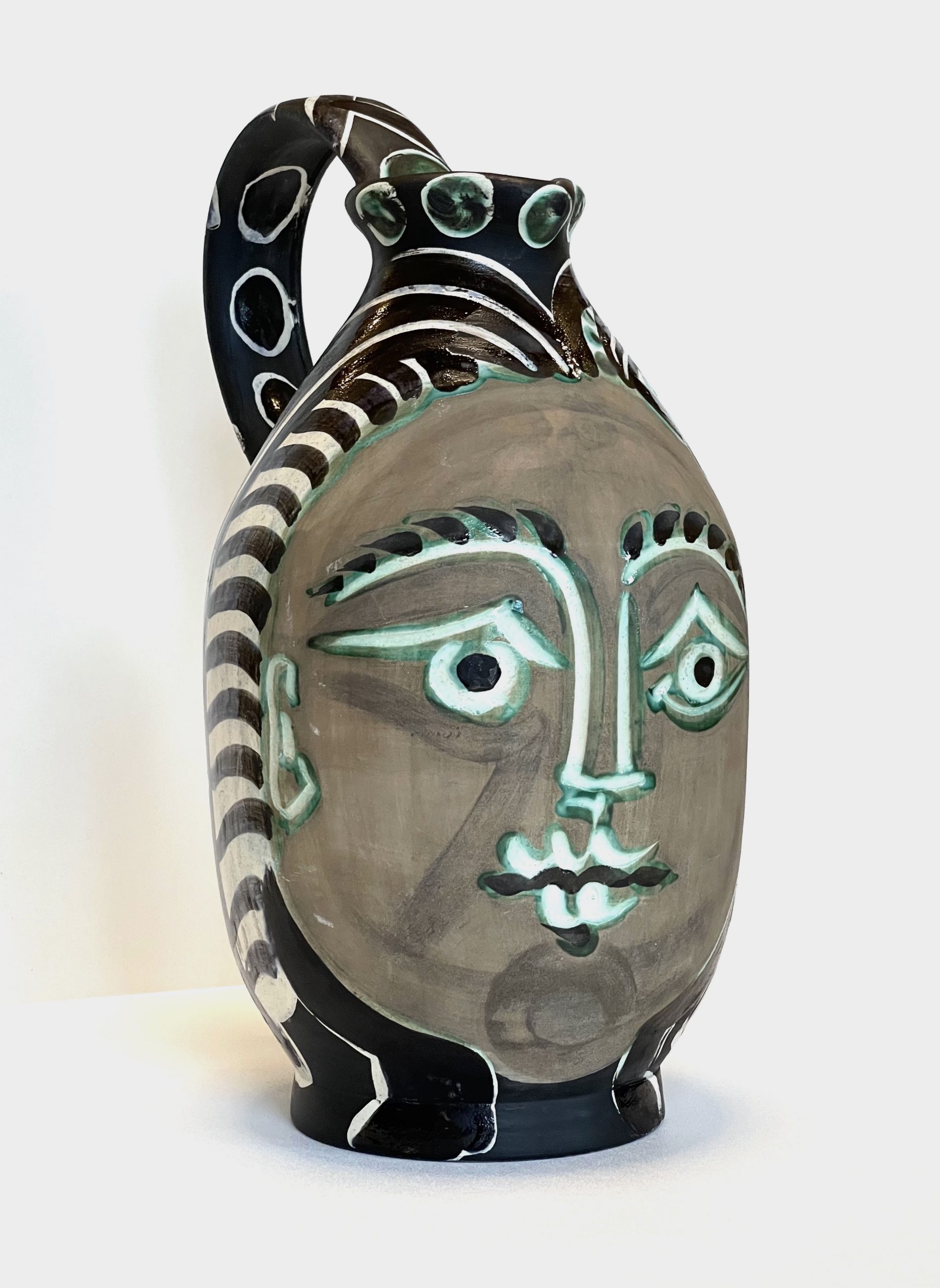
Femme du barbu / Bearded man’s wife (A.R. 193)
Terre de faience turned pitcher, painted in colored engobes, knife engraved and partially brushed glaze.
1953
H: 15 in. / 38 cm.
Black, beige, green, grey patina.
Conceived on 10 July 1953 and executed in an edition of 500.
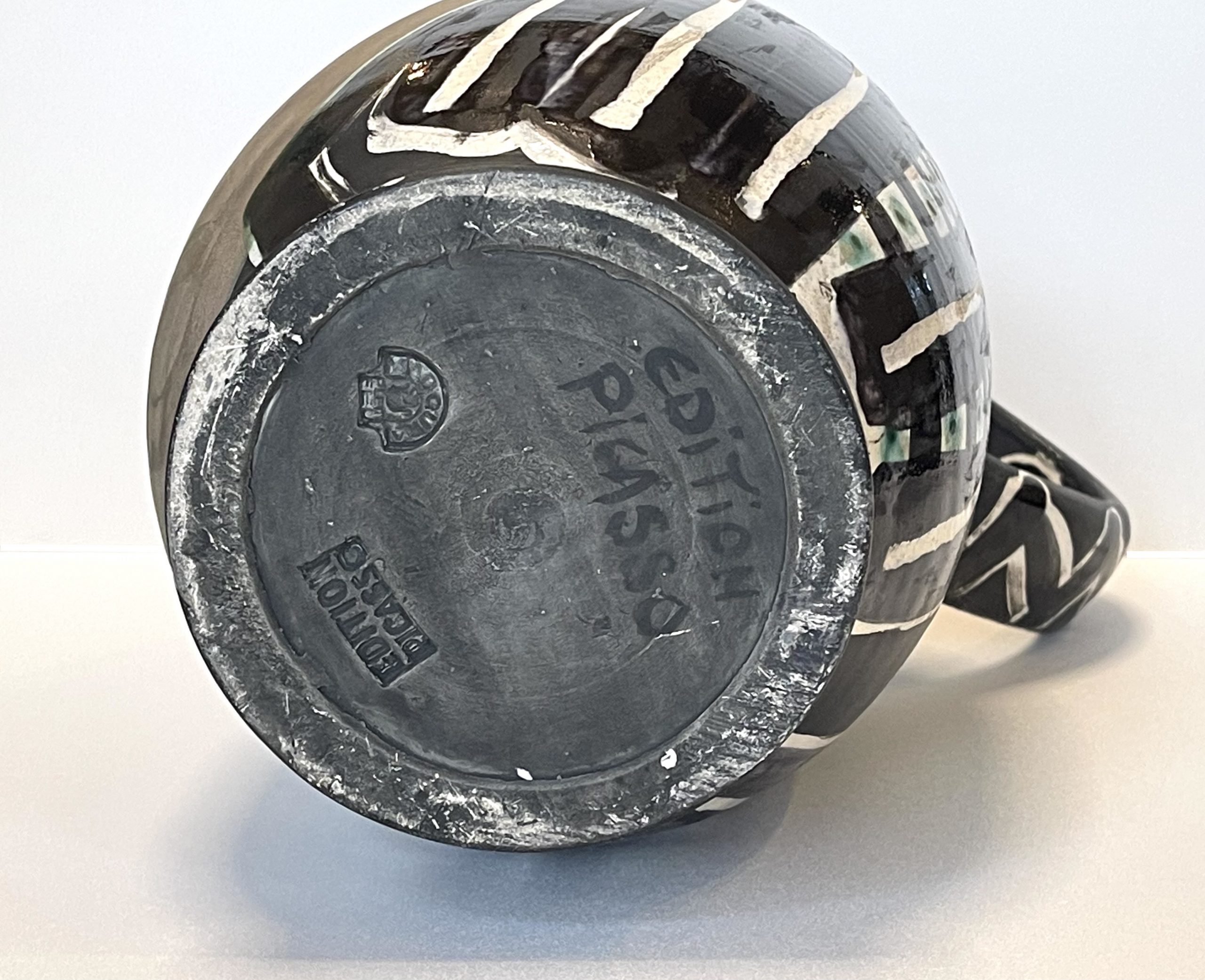
Inscribed “Edition Picasso”, with the Edition Picasso and Madoura stamps.
Exhibition:
“Les Louvre de Pablo Picasso”, 13 October 2021 – 31 January 2022, Louvre Lens Museum,
(another version exhibited).
Literature:
– Alain RAMIÉ, “Picasso, Catalogue of the edited ceramic works 1947-1971”, another version ill. in color p.105, no. 193.
– Georges Ramié, ‘Picasso’s Ceramics’, another version ill. p. 279, no. 720.
Provenance: private collection, NY
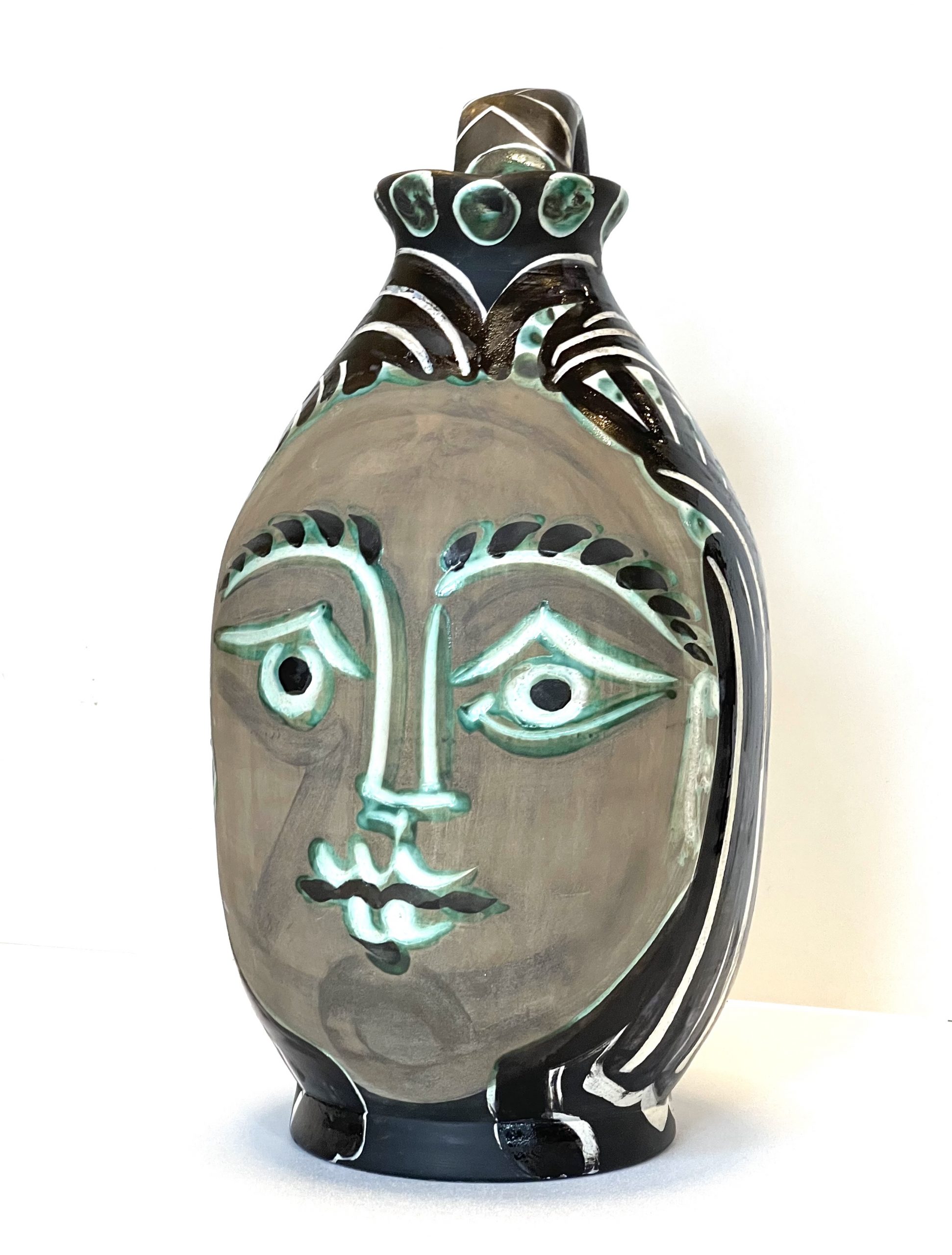
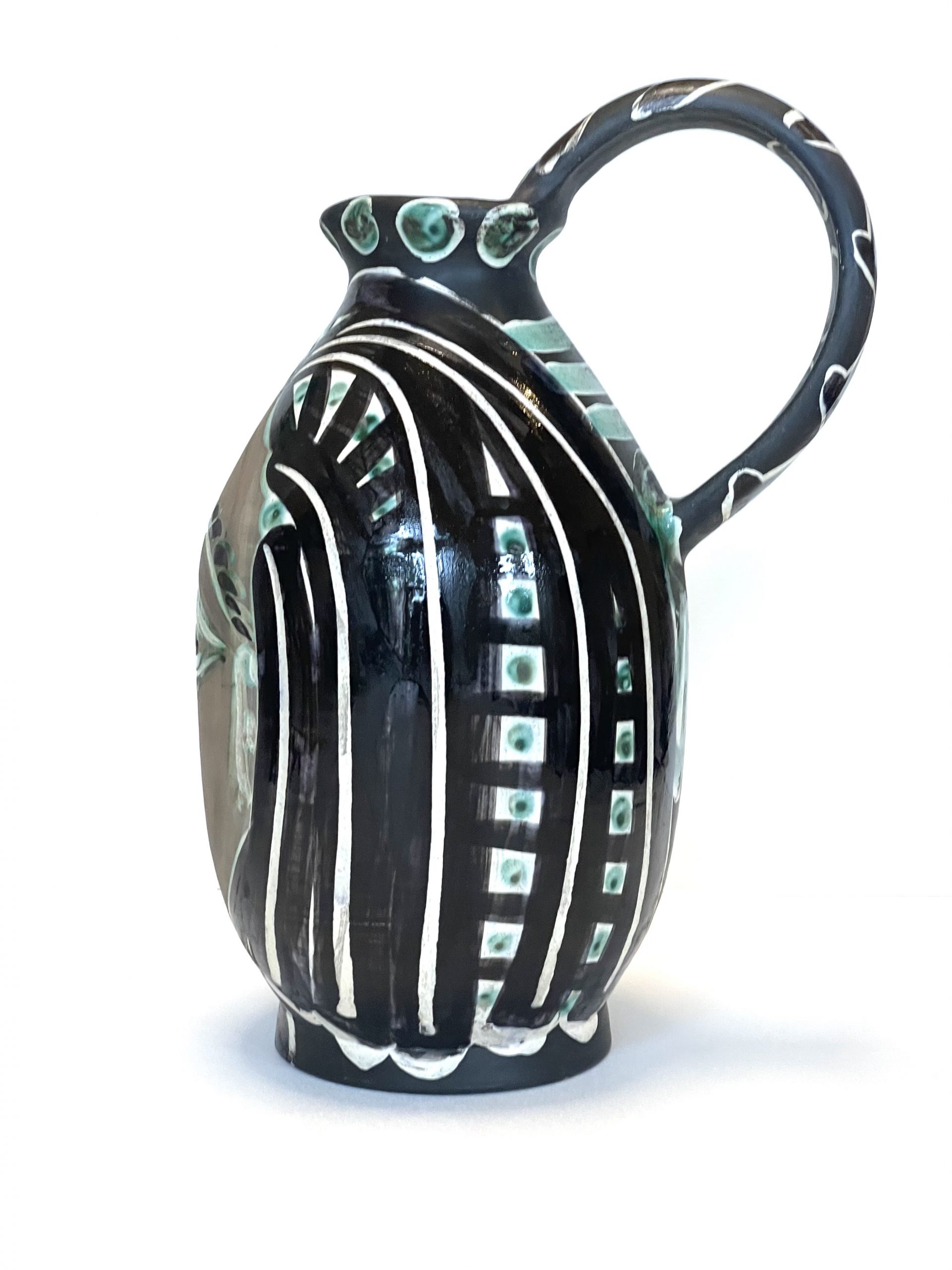
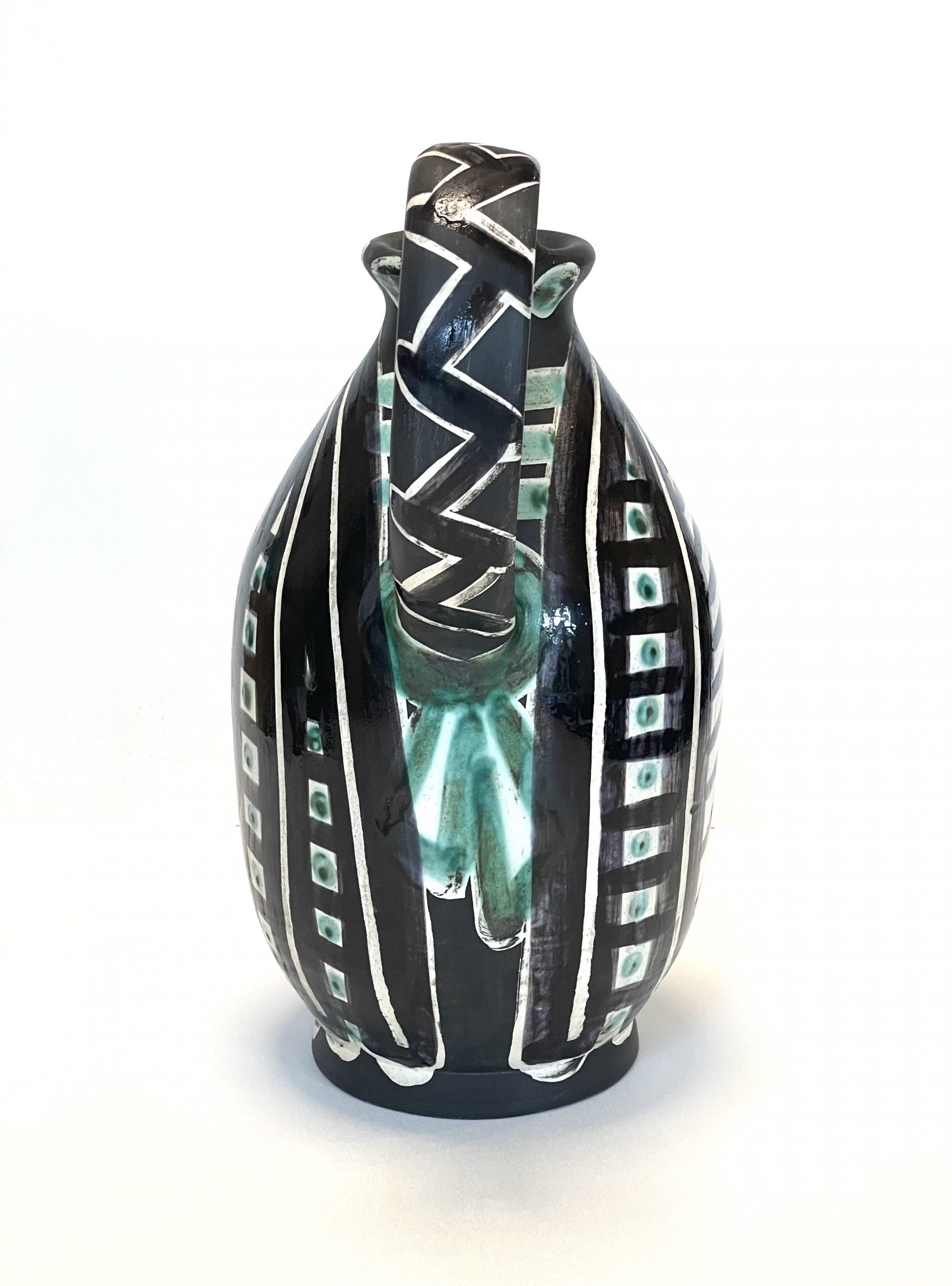
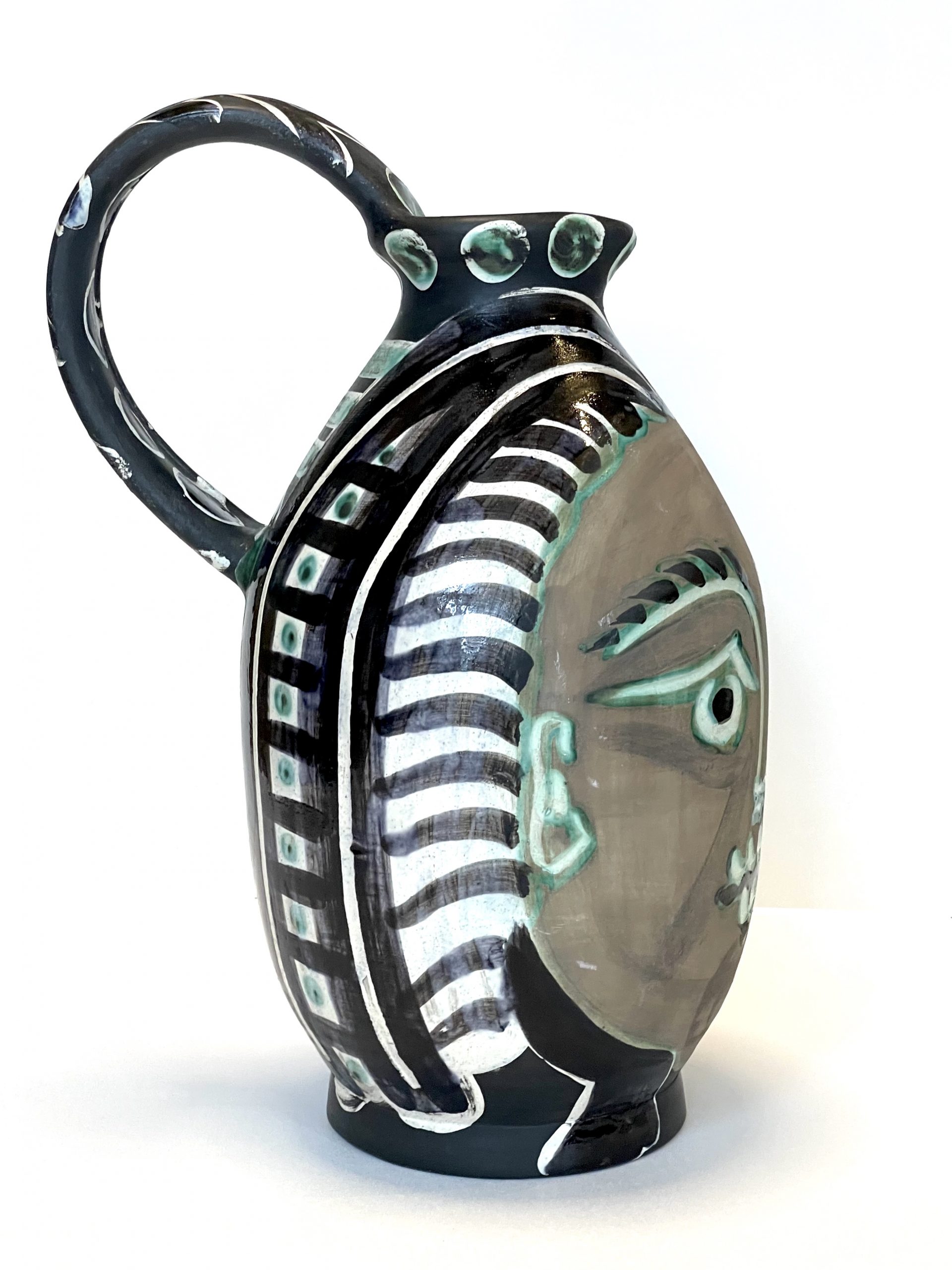
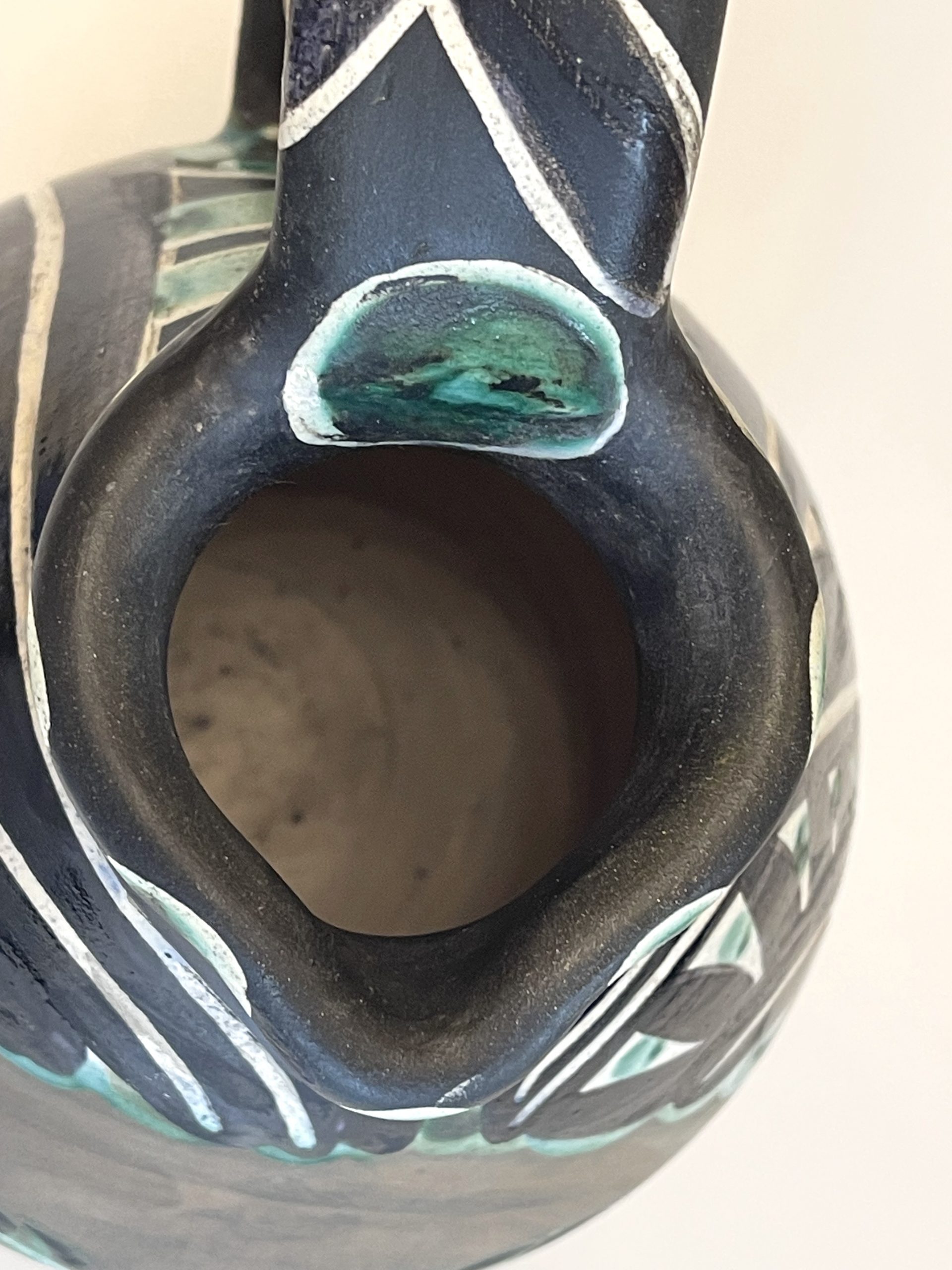
Owning a Picasso ceramic is owning a piece of the artist at his most playful and inventive. In 1953, at the height of his celebrated collaboration with the Madoura workshop in Vallauris, Picasso turned everyday pottery into sculpture, transforming a simple terre de faïence pitcher into a vessel with a face, a personality, and a wink. Femme du barbu captures exactly that alchemy: the form is engraved with a knife, built up in colored engobes, and finished with a partially brushed glaze in a warm palette of black, beige, green, and grey — every mark bearing the immediacy of Picasso’s hand.
The title itself points to a deeper layer beneath the surface charm. “Le Barbu” — the bearded man — was a recurring figure across several of Picasso’s Vallauris ceramics of the early 1950s, and the motif draws on one of antiquity’s oldest visual traditions: Dionysos was represented in archaic and classical Greek art either as a mature, bearded god or, in later depictions, as a youthful, beardless one. By invoking the bearded type, Picasso taps directly into the older, more primal iconography of the wine god — a figure of revelry, fertility, and Mediterranean myth that fascinated him throughout his ceramic period, alongside his parallel obsession with fauns, Pan, and Bacchic companions. Femme du barbu, as the “wife” of this bearded figure, situates the piece within that same mythological universe Picasso built at Madoura, where classical antiquity and modern invention sit side by side on the potter’s wheel.
This is no minor curiosity. A related example was selected for “Les Louvre de Pablo Picasso” at the Louvre-Lens Museum (2021–2022), placing this edition among the works the Louvre itself deemed worthy of exhibition alongside masterpieces from its permanent collection. The piece is further documented in the two standard references on Picasso’s ceramic output — Alain Ramié’s catalogue raisonné and Georges Ramié’s Picasso’s Ceramics — giving it the scholarly footing serious collectors look for. It carries the Edition Picasso and Madoura stamps, with clean provenance from a private New York collection.
For a buyer, this piece offers a rare combination: the name and hand of Picasso, a genuine link to the Dionysian mythology that runs through his ceramic imagination, museum-caliber pedigree, published documentation, and a more accessible entry point than his paintings or works on paper — while still functioning as a genuine sculptural object for the home. It’s a chance to own a functional, fully authenticated Picasso with a Louvre exhibition history and a rich mythological pedigree, at a scale and price point few other Picasso categories can match.