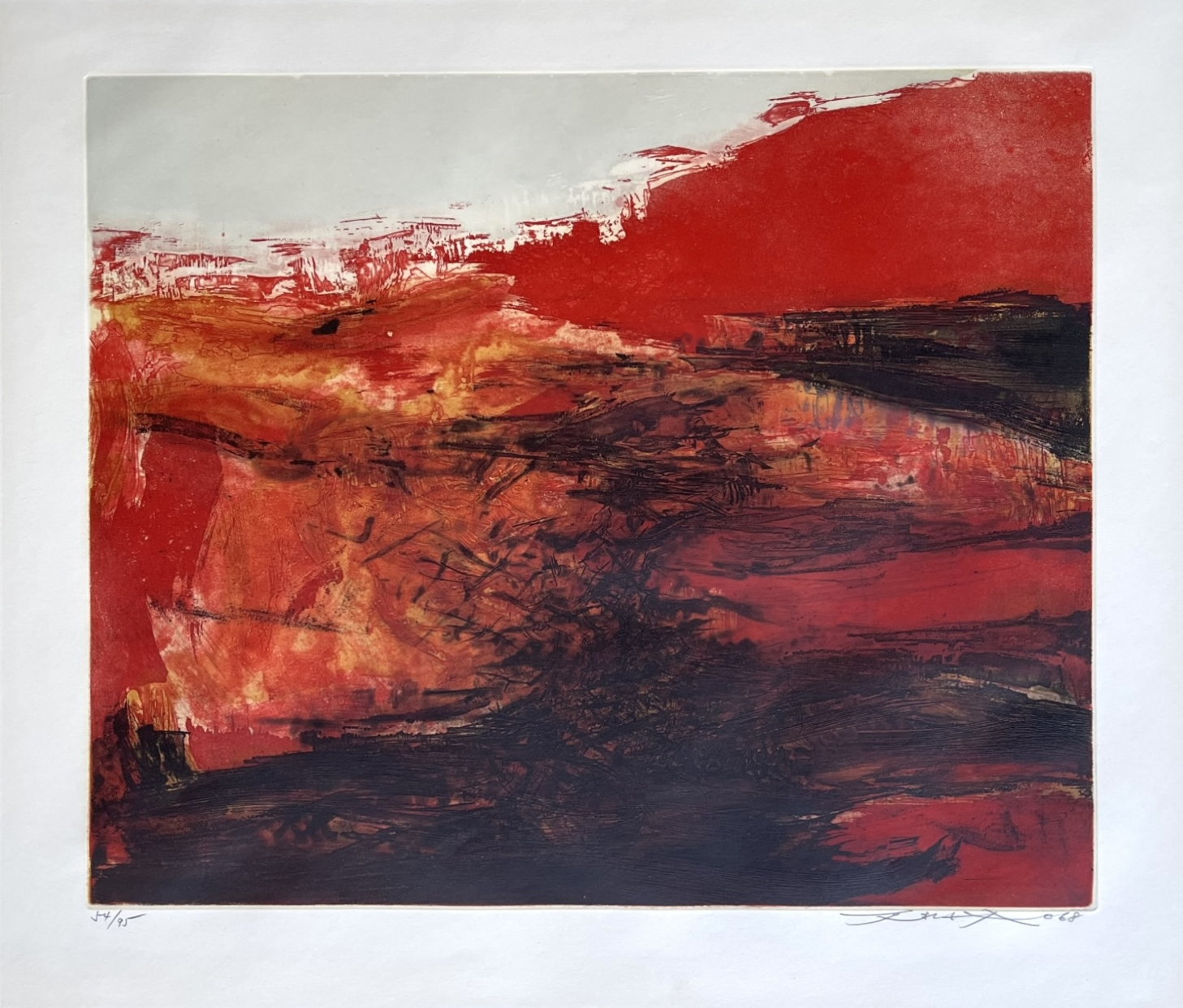
Zao Wou-Ki (1920-2013)
Untitled
1968
Etching with aquatint on Rives paper, printed in 6 colours, 3 copper plates.
22 × 29 9/10 in. | 56 × 76 cm.
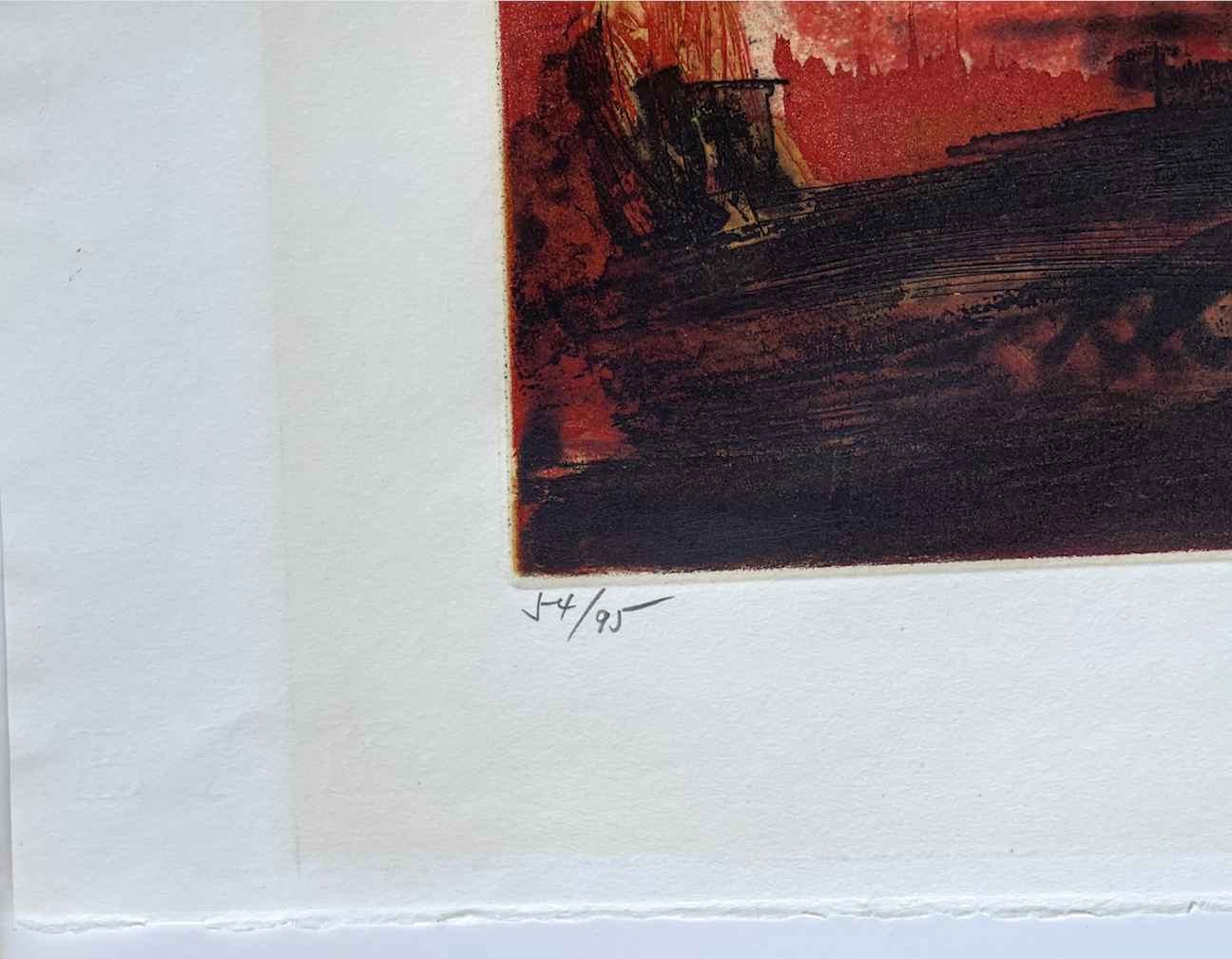
Signed, dated lower right and numbered 54/95 lower left by the artist in pencil
Image: 44.4 x 53.4 cm / Sheet: 56 x 76 cm.
Printed by Imprimerie Arte, Paris.
Published by Al Lublin, New York.
– Literature: Jørgen Ågerup, ed., ‘Zao Wou-Ki: The Graphic Work, A Catalogue Raisonné 1937 – 1995’, Copenhagen, 1995, no. 192, ill. in colour.
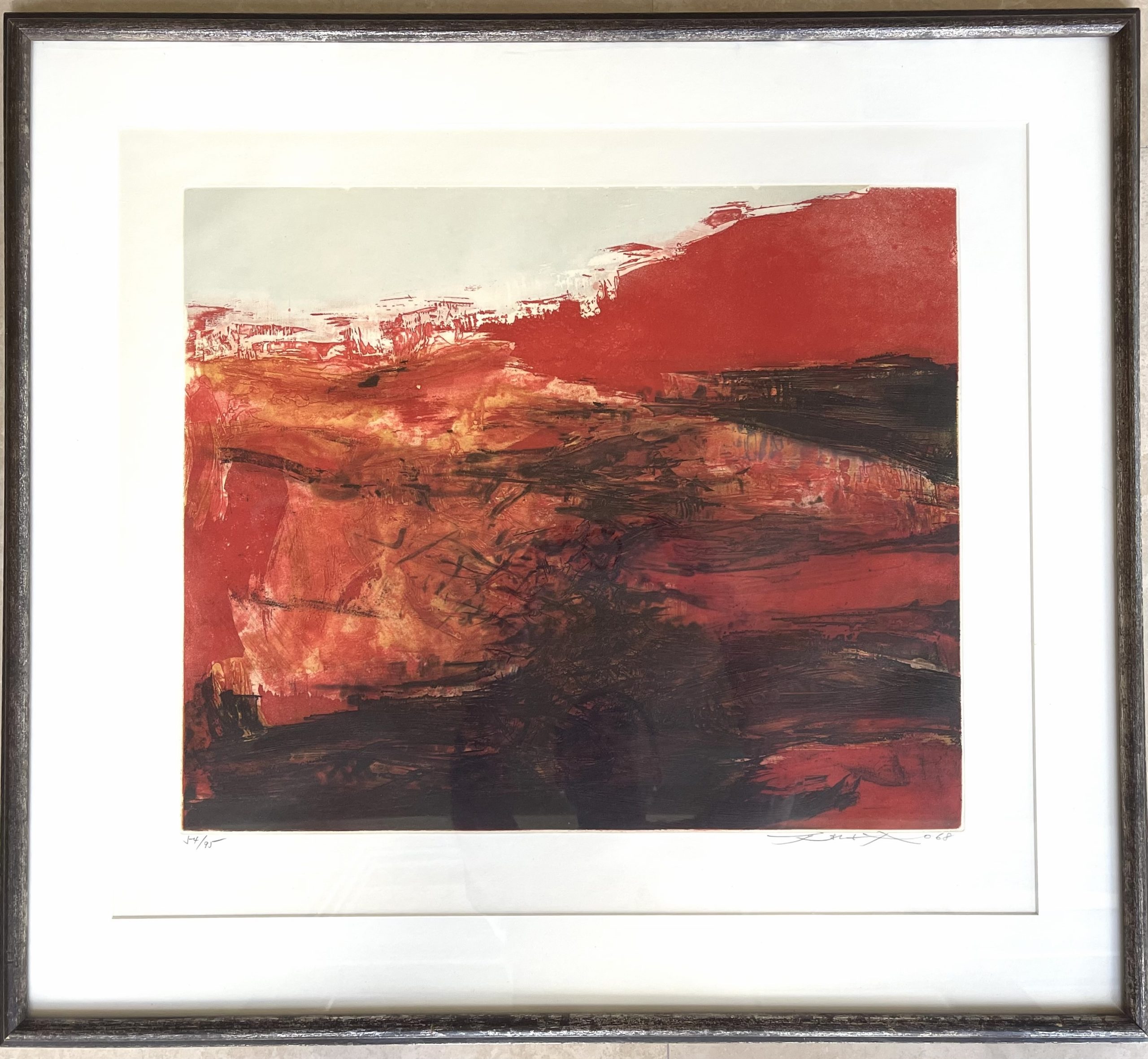
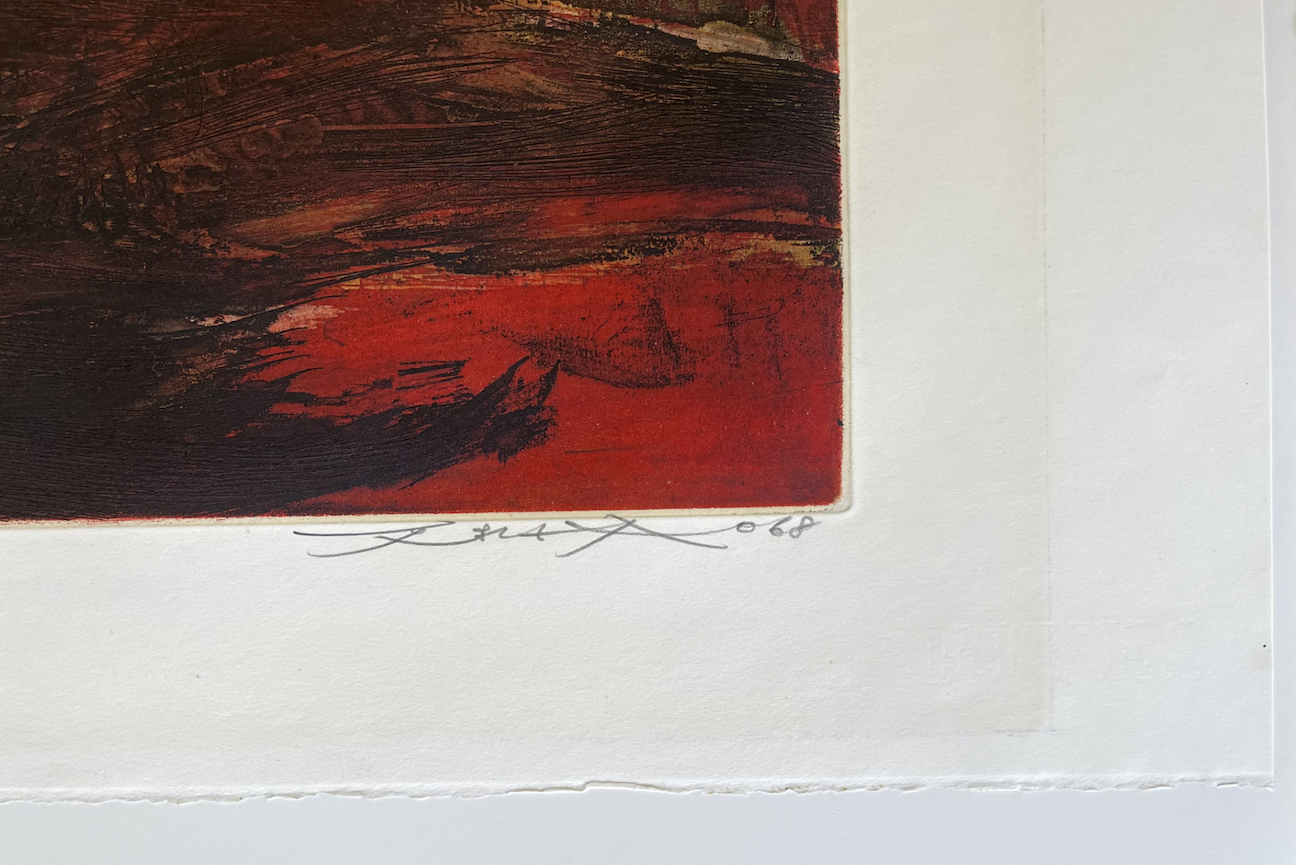
This print dates from what specialists now call Zao Wou-Ki’s “Hurricane Period” (c. 1959–1972) — widely regarded as the apex of his career, when his synthesis of Chinese pictorial heritage and Western gestural abstraction reached its fullest intensity. It was during these years that Zao abandoned titles altogether, marking his works only by date; as he put it, “I only give the date. I am not a poet. Titles are restrictive.” The absence of a title here is therefore not incidental but part of the artist’s deliberate break from narrative or descriptive reference, letting the work exist purely as gesture, energy, and space.
By 1968, Zao had become one of the defining voices of postwar abstraction in Paris — a painter born in Beijing in 1920 who settled in France in 1948 and, over two decades, fused the gestural energy of European abstraction with the spatial sensibility of classical Chinese landscape and calligraphy. Rather than depicting a scene, this print builds an atmosphere — layers of colour and mark suggesting wind, water, or light without resolving into a fixed image, in keeping with the “unrestrained, intangible universe” that defines the Hurricane Period at large: calligraphic lines with no discernible form, charged with the same explosive, dynamic energy found in Zao’s large-scale canvases of the period.
The technical ambition of the work matches its visual one. Printed from three separate copper plates in six colors, the etching and aquatint process allowed Zao to build up the kind of tonal depth and smoky gradation usually associated with his ink paintings — translating a painterly sensibility into the more exacting, additive discipline of intaglio printmaking. It was pulled at Imprimerie Arte in Paris, one of the leading print studios of the era, and published by Al Lublin in New York, reflecting the growing transatlantic market for Zao’s graphic work at the time.
This impression is number 54 from an edition of 95, signed and dated by the artist in pencil. The print is catalogued as no. 192 in Jørgen Ågerup’s Zao Wou-Ki: The Graphic Work, A Catalogue Raisonné 1937–1995 (1995), where it appears with a full color illustration — giving it a documented place within the artist’s complete printed oeuvre.